

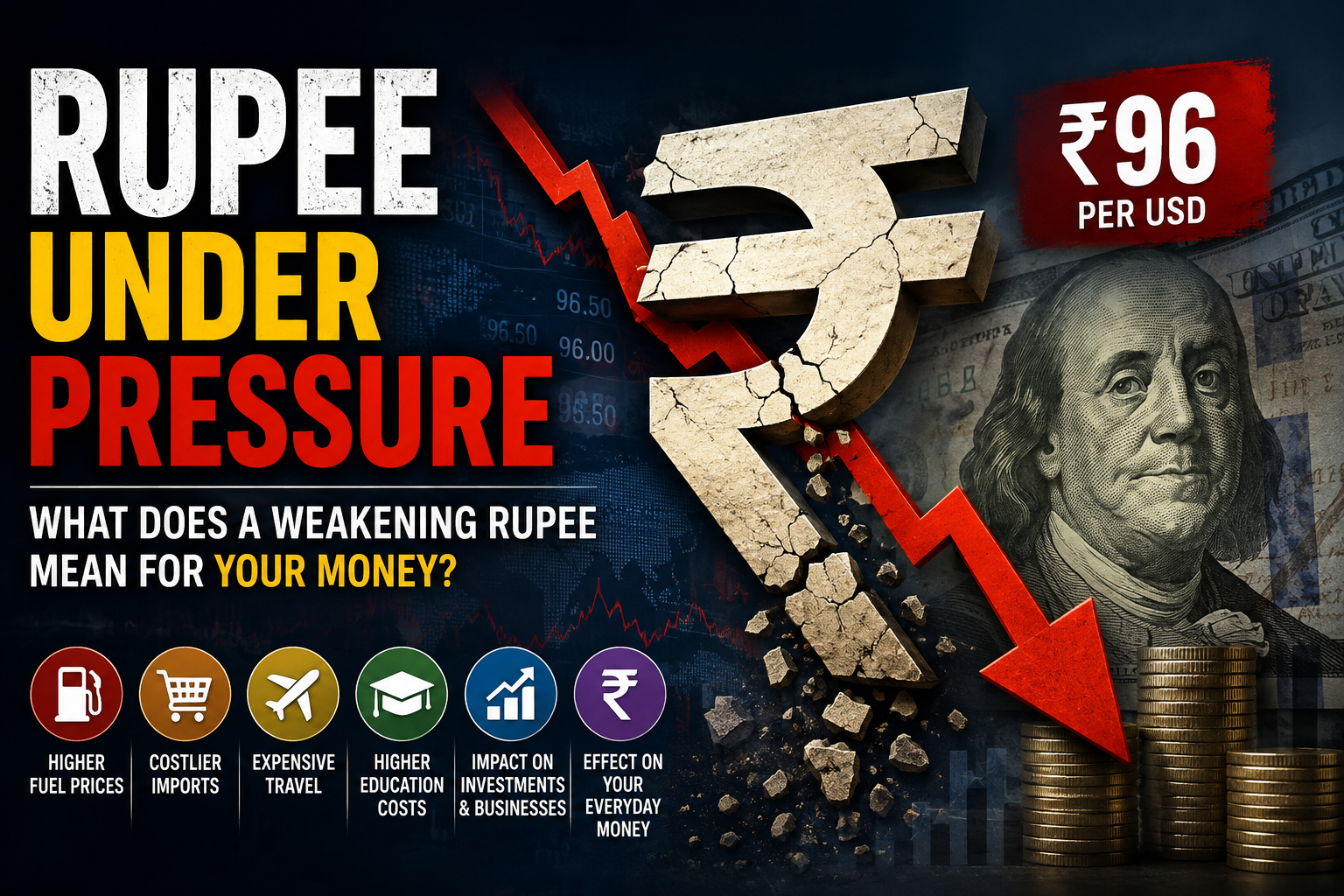
The Indian Rupee reaching around ₹96 against the US Dollar is not just a headline about currency markets—it is a development that can influence the everyday financial decisions of individuals, businesses, investors, and the Indian economy as a whole. Exchange rates may seem like something that only matters to economists, banks, or international businesses, but changes in the value of the rupee can gradually make their way into our daily lives through prices, investments, travel expenses, education costs, fuel prices, and the cost of imported products.
A weakening rupee means that more Indian rupees are required to purchase the same amount of US dollars. This can make imports more expensive, particularly because India depends on imports for important commodities such as crude oil, electronic components, machinery, and several other products. Higher import costs can increase the expenses of businesses and, in some situations, contribute to higher prices for consumers. For students planning to study abroad, families travelling internationally, or businesses making payments in foreign currencies, a weaker rupee can also mean higher expenses.
However, the impact of a falling rupee is not entirely negative. A weaker rupee can make Indian goods and services relatively cheaper for foreign buyers, potentially benefiting exporters and businesses earning revenue in international markets. It can also affect sectors such as information technology, pharmaceuticals, textiles, tourism, and other export-oriented industries. For investors, currency movements can create both risks and opportunities, depending on where and how they invest.
So, what is causing the rupee to come under pressure? Factors such as movements in the US Dollar, global economic conditions, crude oil prices, foreign investment flows, interest rates, inflation, geopolitical developments, and India's trade position can all influence the value of the rupee. Understanding these factors helps us see that exchange rates are not determined by a single event but by a combination of domestic and international forces.
This blog, **“Rupee Under Pressure,”** takes a closer look at what a rupee value of ₹96 against the US Dollar actually means for ordinary Indians. We will explore how currency depreciation affects **inflation, fuel and imported goods, foreign education, international travel, investments, businesses, exporters, importers, and household budgets**. We will also look at the wider impact on India's economy and understand whether a weaker rupee is always a cause for concern or whether it can create opportunities for certain sectors.
Ultimately, the movement of the rupee is not just a figure displayed on financial news channels. It is connected to the prices we pay, the investments we make, the businesses we run, and the financial choices we take. By understanding why the rupee is weakening and how that weakness affects different parts of the economy, we can better understand the changing financial environment around us.
**₹96 to a dollar may look like just an exchange rate—but behind that number lies a story about India’s economy, global markets, your expenses, and your money.**