

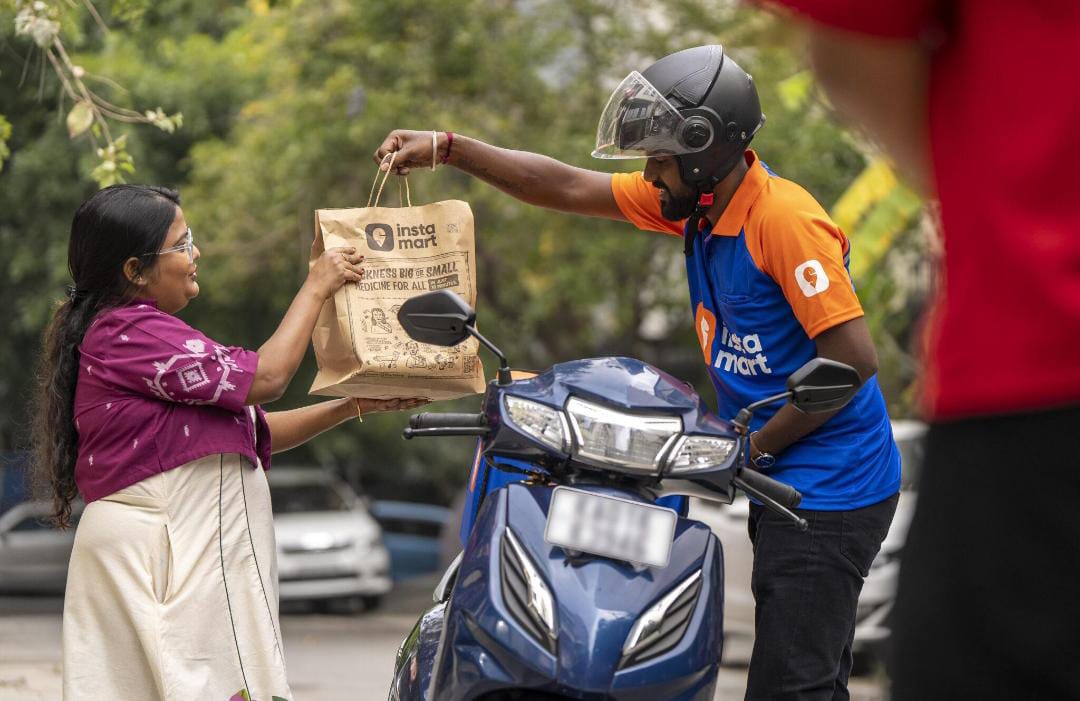
Imagine ordering milk, snacks or household essentials and receiving them within minutes. This is the idea behind quick commerce, one of the fastest-changing segments of India's digital retail market.
Quick-commerce platforms have changed the traditional shopping experience by focusing on speed and convenience. Instead of visiting a supermarket, consumers can order products through a mobile application and receive them quickly from nearby delivery centres.
The growth of quick commerce has particularly influenced younger consumers and people living in urban areas. Busy lifestyles and increasing smartphone usage have made fast delivery attractive. Consumers can purchase not only groceries but also snacks, personal-care products, electronics and other everyday items.
Quick commerce has also created new opportunities for businesses. Local brands and retailers can reach customers through digital platforms, while delivery networks and small fulfilment centres have become important parts of the modern retail ecosystem.
However, the model also faces challenges. Maintaining very fast delivery requires a strong logistics network and strategically located warehouses. Companies also have to manage delivery costs, competition, product availability and profitability.
The rise of quick commerce is changing consumer expectations. Customers increasingly value convenience and speed along with price and product quality. This may encourage traditional retailers to adopt more digital and faster delivery options.
Quick commerce is more than just fast delivery; it represents a change in the way people shop. As India's digital economy grows, the sector is likely to continue influencing retail, consumer behaviour and competition in the market.